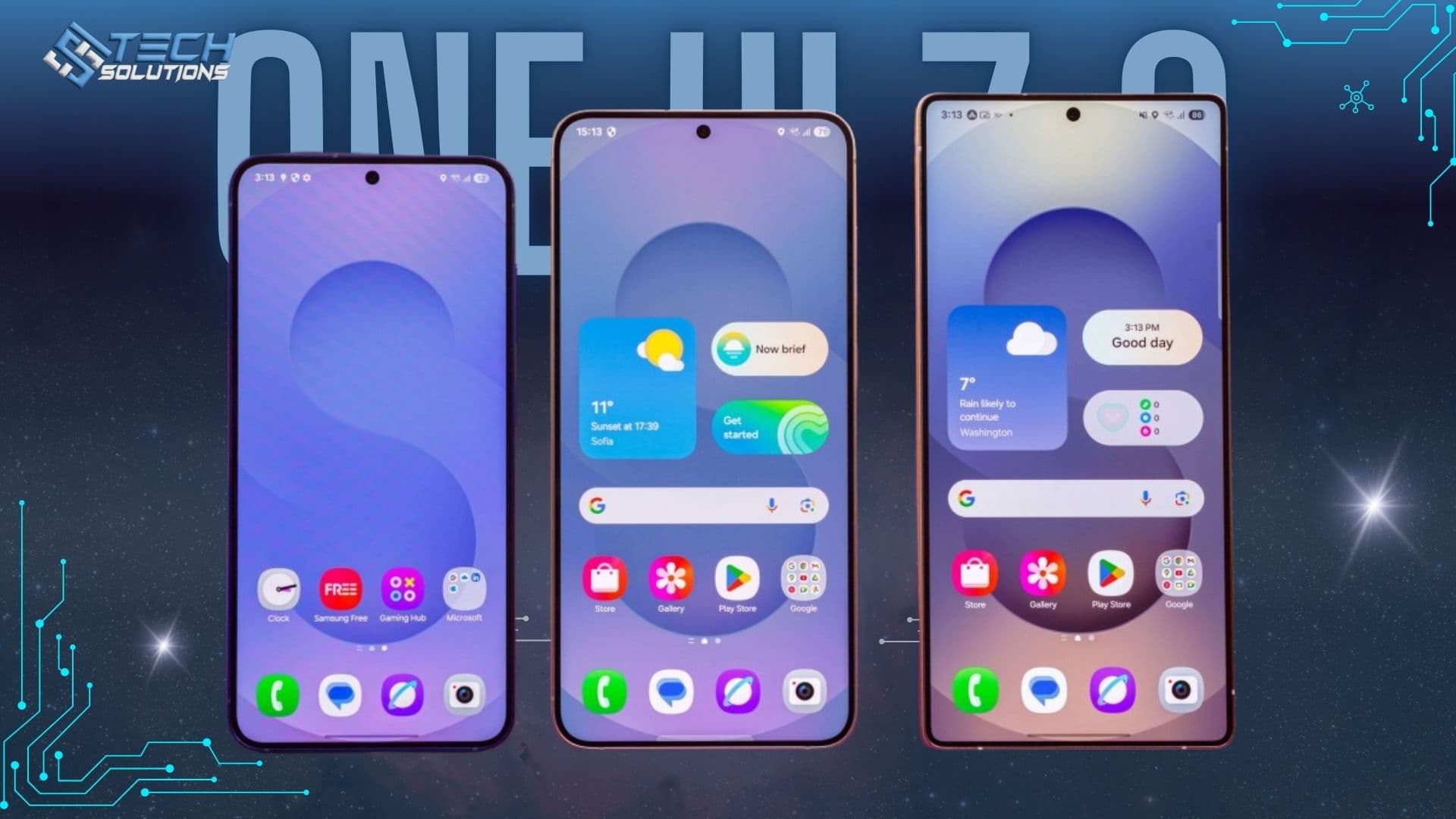
Samsung One UI 7: a practical review
We spend a lot of time on Android devices for client work, and Samsung phones make up a large share of them. One UI 7 is Samsung's most visible redesign of its Android software in years, so we have been using it as a daily driver and paying attention to how it feels rather than what the marketing says. This is an impressions piece. We are not going to quote specs or dates; we are going to tell you what stood out in our use.
First impression: it looks different, and mostly better
The first thing you notice is that One UI 7 looks lighter and rounder. Icons, widgets and system panels have been redrawn with softer corners and more spacing. It feels less cluttered than earlier One UI versions, and the visual language is more consistent across Samsung's own apps.
In our use, the redesign is the kind you stop noticing after a couple of days, which is a compliment. It does not get in the way. The home screen, lock screen and quick panel all feel like they were designed together rather than updated one at a time.
Customisation
Samsung has always given users more control over the home screen than stock Android, and One UI 7 continues that. In our use, the things we changed most were:
- ✓**Widgets.** The new widget styles fit together more neatly, and the lock screen accepts widgets in a way that feels intentional rather than bolted on.
- ✓**Icons and layout.** Grid options, icon shapes and folder behaviour remain flexible. If you like a dense home screen or a sparse one, you can have either.
- ✓**Quick settings.** The split between notifications and quick toggles is new. It takes some getting used to, and some of us switched it back. Others preferred it. Samsung lets you choose, which is the right call.
The overall feel is that Samsung wants the phone to look good out of the box but is still happy to let you rearrange everything.
Notifications
Notifications are where One UI 7 changed the most in daily use. The redesigned panel groups things more clearly and the split quick-panel layout means you can reach toggles without scrolling past a wall of alerts.
Samsung has also added a persistent area for ongoing activities, such as timers, media playback and navigation, that sits near the top of the screen. In our use this was helpful: we glanced at it more than we expected to, and it reduced the number of times we opened the notification shade just to check on something running in the background.
If you get a lot of notifications, this is the update's most practical improvement.
Performance feel
We want to be careful here because "feels fast" is subjective and depends on the phone. With that caveat, in our use One UI 7 felt smooth. Animations are quicker and more consistent, and the interface responds without the small hesitations that older One UI versions sometimes showed when opening the app drawer or switching between recent apps.
Battery behaviour felt comparable to what we were used to. We did not notice a meaningful change either way in normal use, which is what you want from a software update.
Samsung's AI features
One UI 7 puts Samsung's AI tools closer to the surface, with a daily summary feature, writing assistance and translation available in more places. In our use, the translation and summarisation features were the ones we returned to. Some of the others are interesting demos rather than daily habits. Your mileage will vary, and everything can be ignored if it is not for you.
Who it suits
**People who like to customise.** If you enjoy arranging your home screen and tweaking how the phone looks, One UI 7 gives you more polished pieces to work with.
**Heavy notification users.** The reorganised panel and ongoing-activity area are genuinely useful if your phone is busy all day.
**Existing Samsung users.** If you already know One UI, this is a clear step forward and nothing important has moved out of reach. The learning curve is short.
**People who want stock Android.** One UI 7 is still One UI. It is opinionated, it includes Samsung's own apps and services, and it does things its own way. If you prefer Google's version of Android, this update will not change your mind.
Our verdict
One UI 7 is a good update. The visual refresh is cohesive, the notification changes solve a real problem, and the customisation options remain among the best on Android. It does not reinvent the phone, and it does not need to. In our use, it made the phone nicer to look at and slightly easier to live with, and that is what a software update should do.
Want this for your business? Message us on WhatsApp +92 320 0496154.