
Fuel Monitoring System for Trucks and Fleets
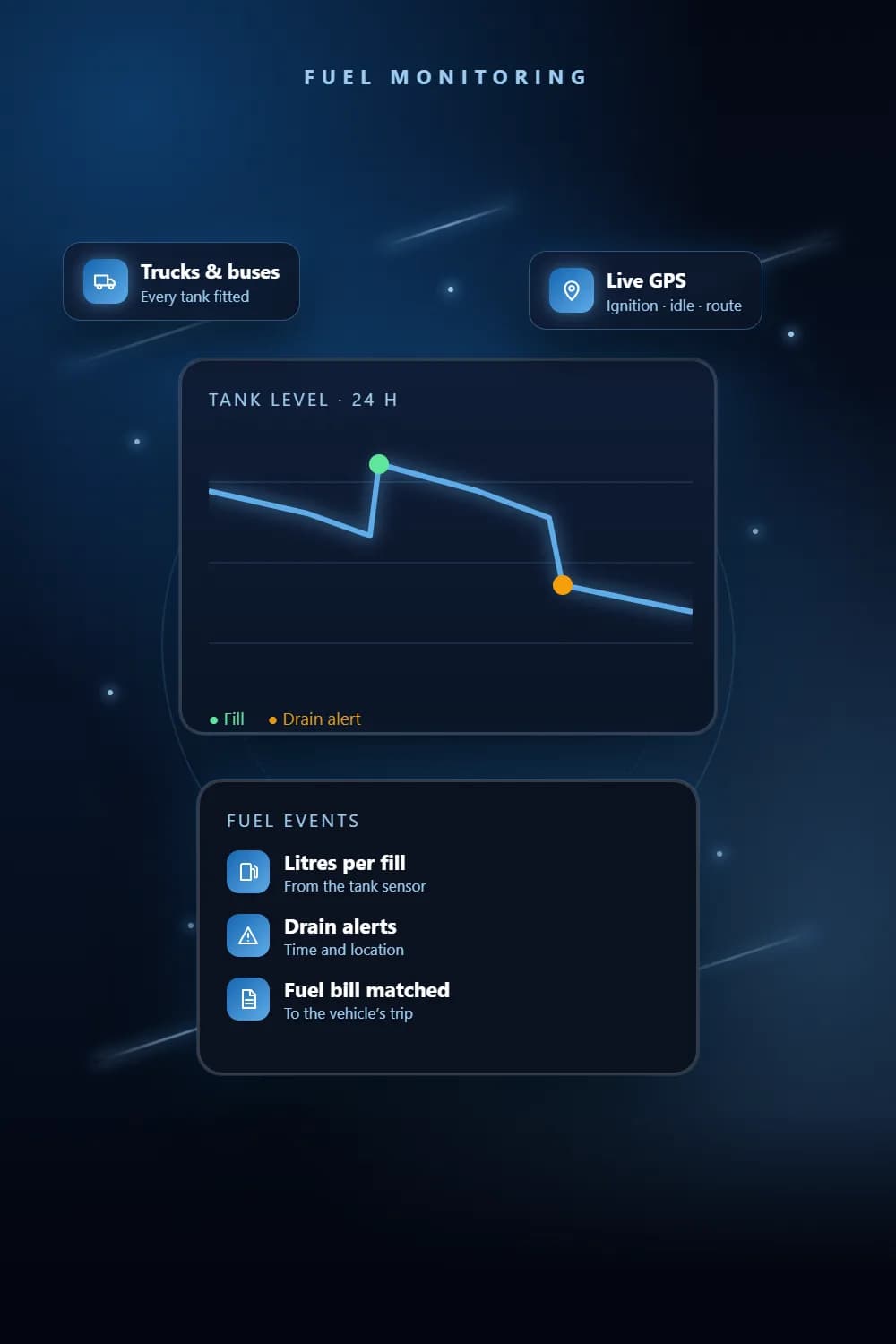
A fuel monitoring system uses a sensor in each vehicle’s tank to record fuel level, consumption and every fill and drain in litres, and links it to the vehicle’s GPS trips so you can see where fuel went. We fit the sensors and trackers, set up the platform and build the software that matches fuel-card bills to trips. It runs today for a logistics fleet in Saudi Arabia.
Key takeaways
- 1Fuel level sensors record consumption and every fill and drain, in litres.
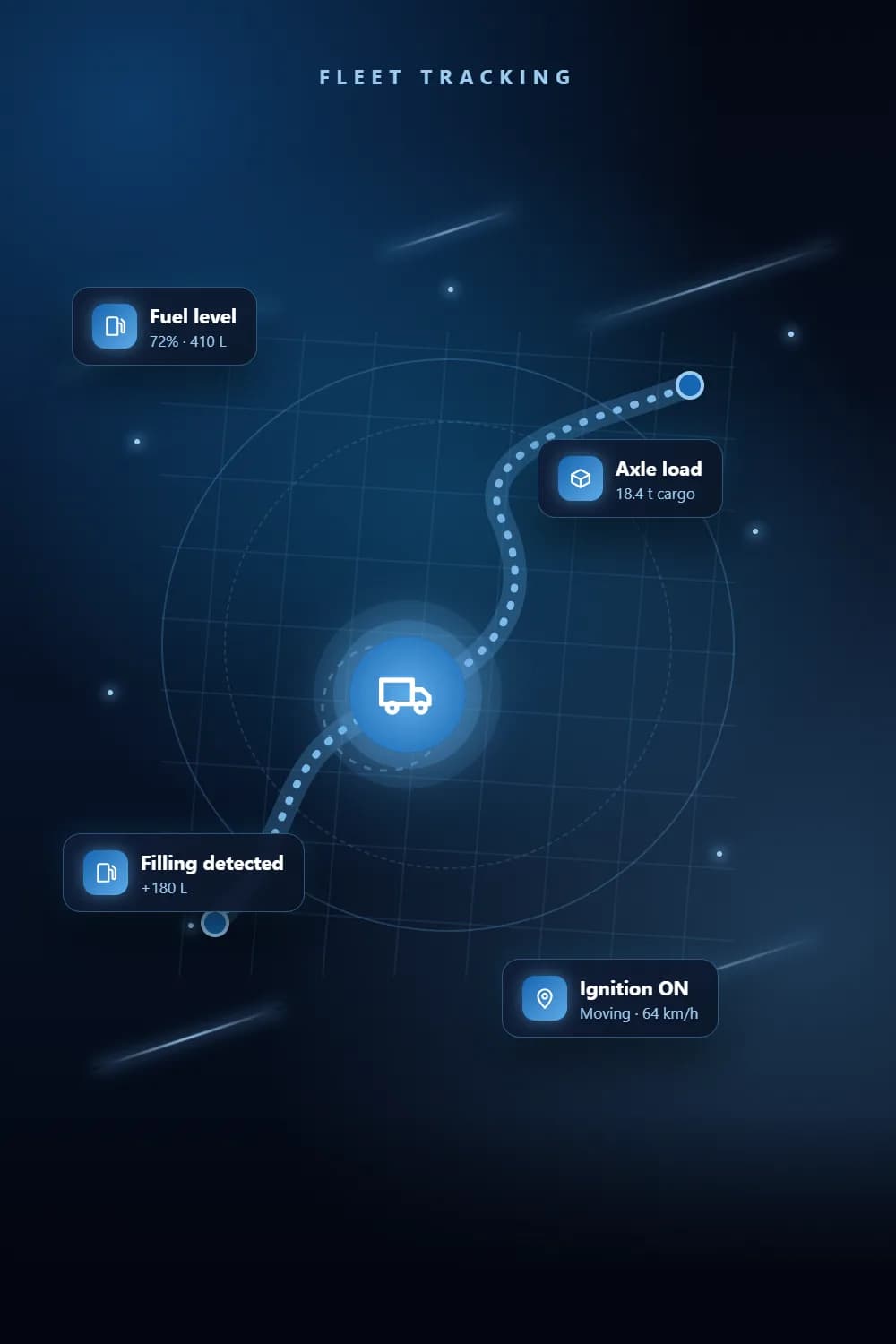
- 2GPS trackers show location, speed, ignition and idle time against each fuel event.
- 3Fuel-card bills are matched to the vehicle’s trip on the fill date or the day after.
- 4Anything that cannot be matched goes to a review list instead of being guessed.
- 5Anti-theft mesh in the tank and load monitoring on trucks.
The problem
Why businesses need Fuel Monitoring System
Fuel that cannot be explained
Fuel bills rise but nobody can say which vehicle used it, on which trip, or whether it was drained.
Fuel bills matched by hand
Accounts look up each plate, find the trip and type the litres into the expense form, one line at a time.
Idling and detours
Engines idle and routes stretch, and the cost only shows up in the monthly fuel bill.
Vehicles that go offline
A tracker stops reporting and nobody notices until data is missing.
What you get
What does our Fuel Monitoring System service include?
Fuel level sensors
Omnicomm sensors give fuel level, consumption, and fillings and drains with litres per event.
GPS and satellite tracking
Teltonika trackers on every vehicle, with satellite units where mobile coverage drops out.
Live fleet platform
Live location, speed, ignition, route history, and parked, idle and moving states against geofences.
Fuel bill matching
The fuel-card export is read automatically, totalled per plate and fuel type, and each fill is matched to its trip and posted as an expense.
Theft protection and load data
Anti-theft mesh in the fuel tank, with axle load and cargo weight monitoring on trucks.
Daily offline report
An email report on local time lists vehicles that stopped reporting, so faults are fixed quickly.
How it works
How we deliver Fuel Monitoring System
- 1
Survey the fleet
We list every vehicle, tank type and route, and agree which alerts and reports you need.
- 2
Fit and calibrate
We install and calibrate fuel sensors and trackers, and test every unit before handover.
- 3
Connect your data
We set up the tracking platform and connect your fuel-card export and trip records.
- 4
Go live and review
Fuel matching and alerts run daily, and unmatched fills go to a short review list.
Tools & platforms
What we build with
- Omnicomm fuel sensors
- Teltonika GPS
- Satellite trackers
- Fleet tracking platform
- Python
- Flask
Industries
Who it's for
- Logistics and transport fleets
- Trucks and tankers
- Buses and staff transport
- Construction and plant vehicles
Pricing
What affects the cost of Fuel Monitoring System?
Every project is quoted on its scope. These are the factors that move the price.
Number of vehicles and fuel tanks to fit.
Sensor type per tank, and whether satellite trackers are needed.
Whether fuel bills must be matched to trips in your own system.
Extras such as dash cams, load monitoring or custom reports.
FAQ
Frequently asked questions
It is a sensor in the fuel tank plus a GPS tracker and software. Together they show fuel level, consumption, and every fill and drain in litres, linked to where the vehicle was at the time.
The sensor records every drain in litres with its time and location, so a drop in fuel that does not match driving stands out. Anti-theft mesh in the tank makes siphoning harder.
The fuel-card export is totalled per plate and fuel type, then each vehicle is matched to its trip on the fill date or the day after. Fills that cannot be matched are listed for review rather than guessed.
Cars, trucks and buses. Each tank gets a sensor sized to it, and trucks can also carry axle load and cargo weight monitoring.
Yes. Our fuel monitoring and dispatch project runs for a logistics fleet in Saudi Arabia, and we also work in Pakistan and the UAE.
Related
Services that work well with this
Need Fuel Monitoring System? Get a free quote.
Tell us what you need. We reply within one business day with a clear scope and quote.