
Key takeaways
- 1A fuel monitoring system reads the fuel level in each tank with a sensor, logs fillings and drops against time and GPS position, and shows what each truck really burns.
- 2The sensor alone is not enough: the value comes from matching fuel events to trips and to fuel-card bills, so every litre has a vehicle, a driver and a reason.
- 3Drain alerts need a time and a place. A drop in the tank at a known depot is normal; the same drop on a highway is not.
- 4Ask how fillings and drains are detected, whether the sensor suits your tank, and whether the data feeds your trip and expense records.
- 5Whatever you buy, check who owns the data and whether it works with the GPS trackers you already pay for.
A fuel monitoring system for trucks reads the fuel level in each tank with a sensor, records every filling and drop against time and GPS position, and matches those events to trips and fuel-card bills. It shows what each truck really burns and flags drains, so fuel stops being the cost nobody can explain. Before you buy, check four things: the sensor and how it is fitted, how fillings and drains are detected, whether the data reaches your trip and expense records, and who owns the data.
Why fuel goes missing
On most small fleets fuel is the biggest running cost and the least visible. The usual picture is the same:
- Fuel bills arrive at the end of the month, with no way to see how much each truck took on or where fuel was drained.
- Nobody knows the real consumption of each vehicle, so a truck that burns more than it should is never noticed.
- Fuel-card statements and trip records live in separate places and are matched line by line, by hand.
A monitoring system fixes the first two by measuring the tank itself. A good one also fixes the third.
How a fuel monitoring system works
- 1A sensor in the tank measures the fuel level. This is the part that goes in every tank on the truck.
- 2A tracker sends the readings along with the truck's position, speed and ignition state.
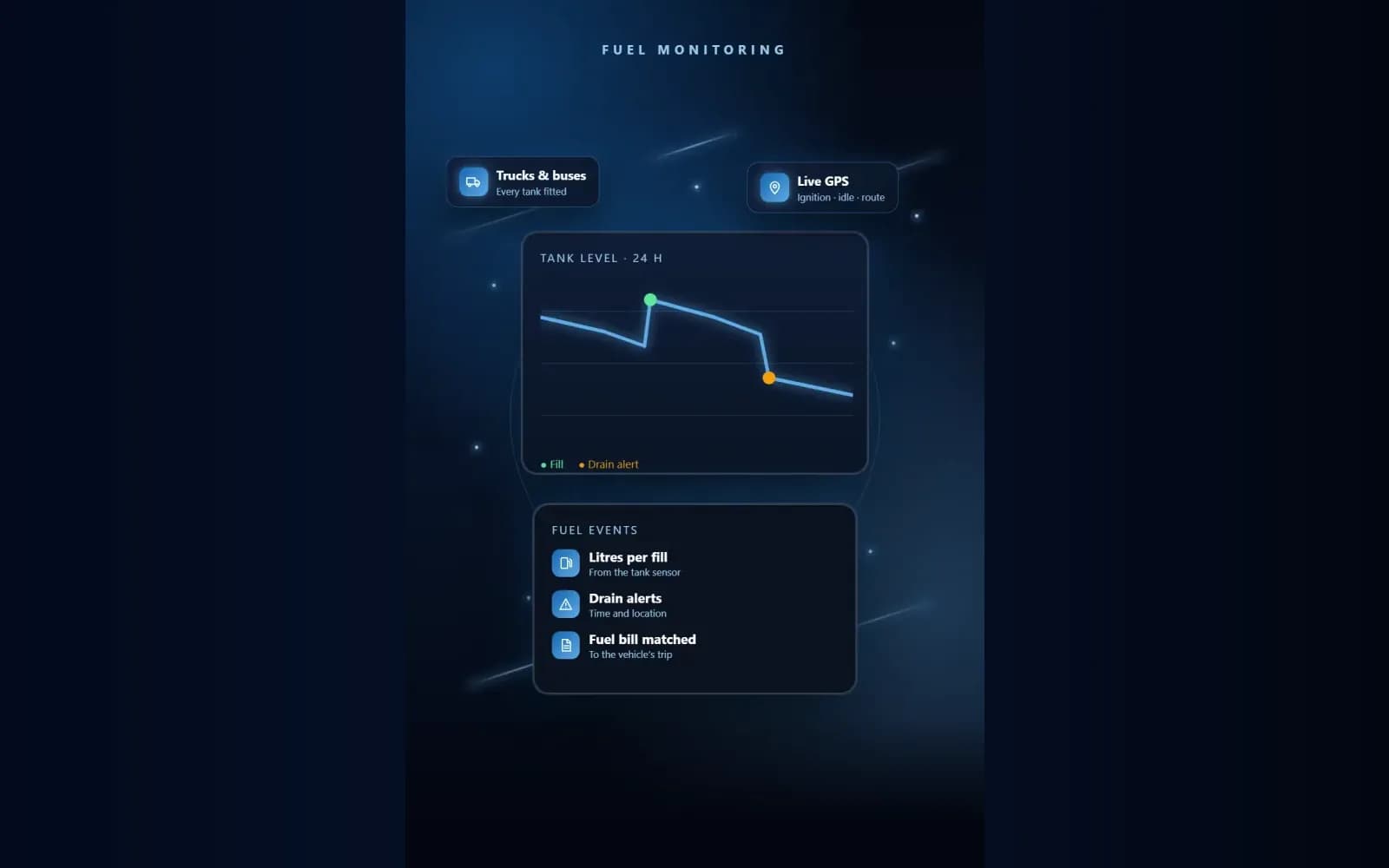
- 3The software looks for events. A rise in level is a filling, with the litres added. A sudden drop is a possible drain. A slow decline while moving is consumption.
- 4Each event is tied to a place and a time, so you can tell a drop at your depot from the same drop on a quiet road.
Four sources, four questions
Fuel control works when four sources of data are read together:
| Source | What it tells you |
|---|---|
| GPS tracker | Where the truck is, how fast, and whether the ignition is on |
| Fuel sensor | How much fuel is in the tank, and when it rises or falls |
| Fuel-card statement | What was bought, when, in what quantity and at what price |
| Trip record | Why the truck moved, for which client, and which driver |
A drain alert is only useful with the GPS position beside it, and a fuel bill only makes sense next to the trip it paid for.
Matching fuel bills to trips
This is where most of the money is saved, and where most systems stop short. We built a bot for a transport company in Saudi Arabia that reads the fuel-card provider's file, totals it per plate and fuel type, matches each transaction to its trip, and posts the expense with litres, amount and driver. Before that, those records lived in separate portals and were matched by hand.
We cover the dispatch side of the same project in automating fleet dispatch and fuel expenses.
What to look for in sensors and fitting
- Tank fit. The sensor must suit the shape and depth of your tanks. Ask what happens on trucks with more than one tank.
- Fillings and drains. Ask how the system tells a real filling from a sensor jump when the truck is on a slope or braking hard, and what it does about it.
- Anti-theft protection. Mesh fitted in the tank makes siphoning harder, and is a cheap addition when the sensor is installed.
- Alerts with context. A drain alert should arrive with the time and the location, not just a number.
Our fuel monitoring system page explains what we fit, and vehicle tracking covers the tracker side.
Where the live board fits
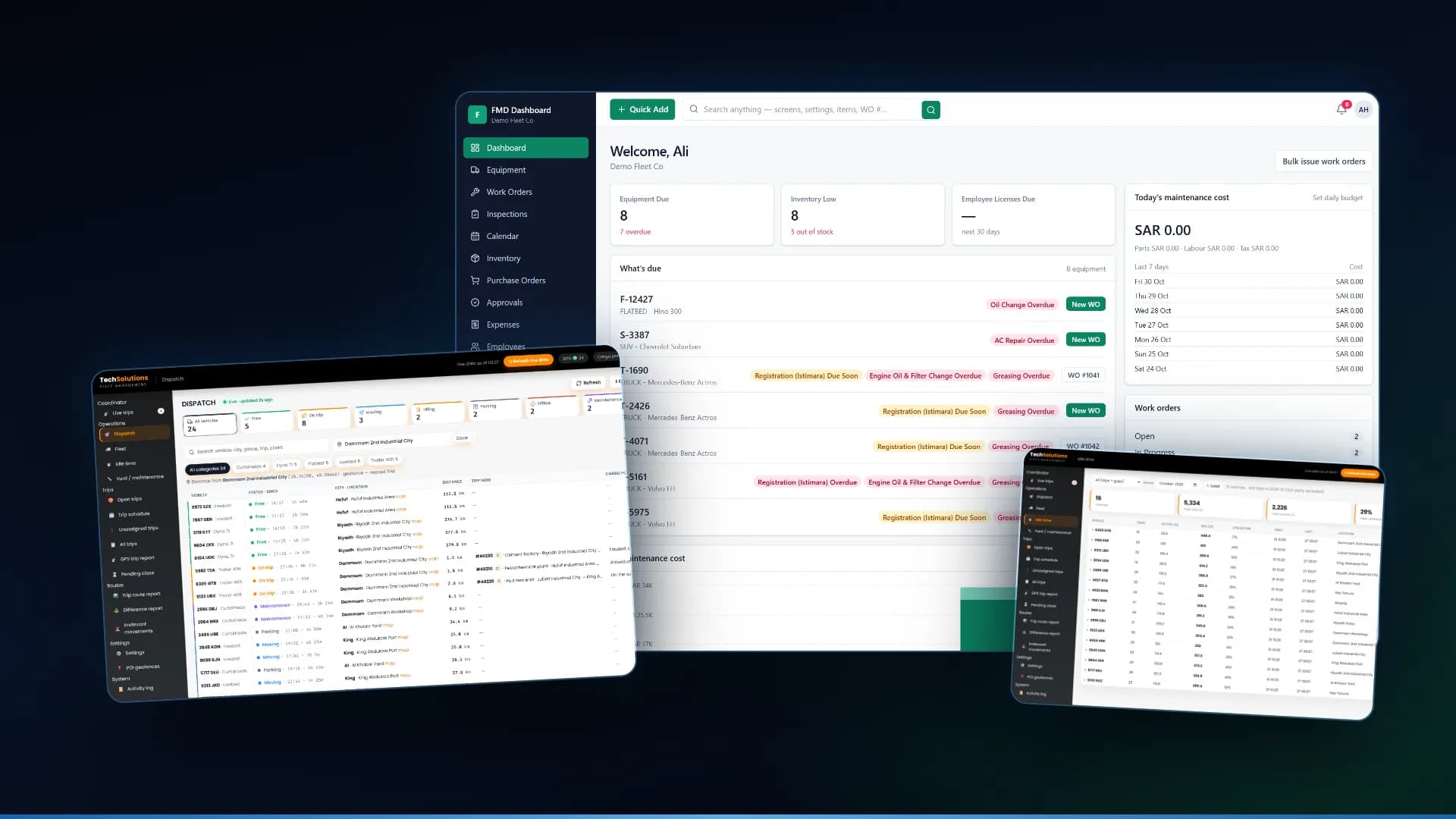
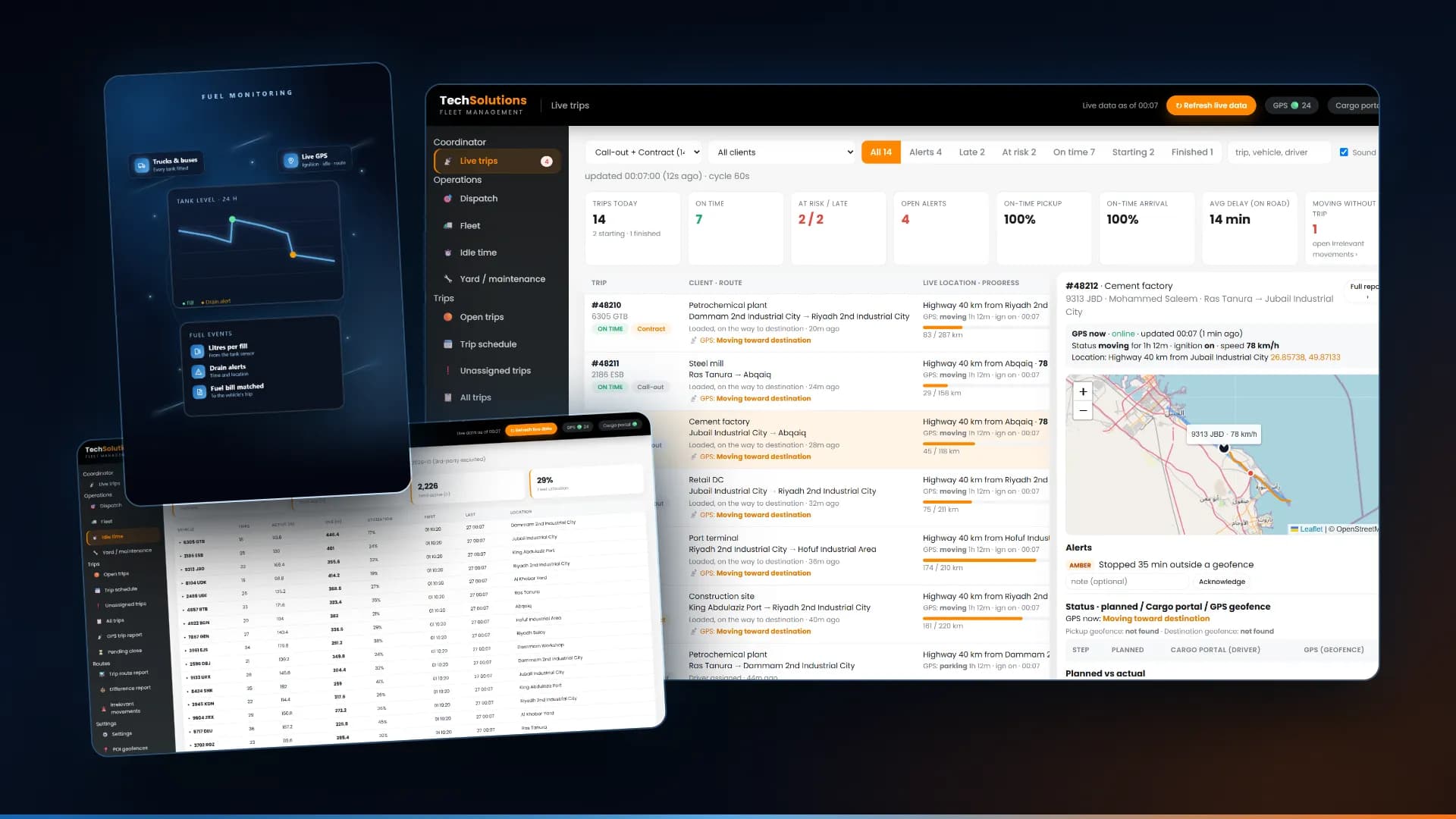
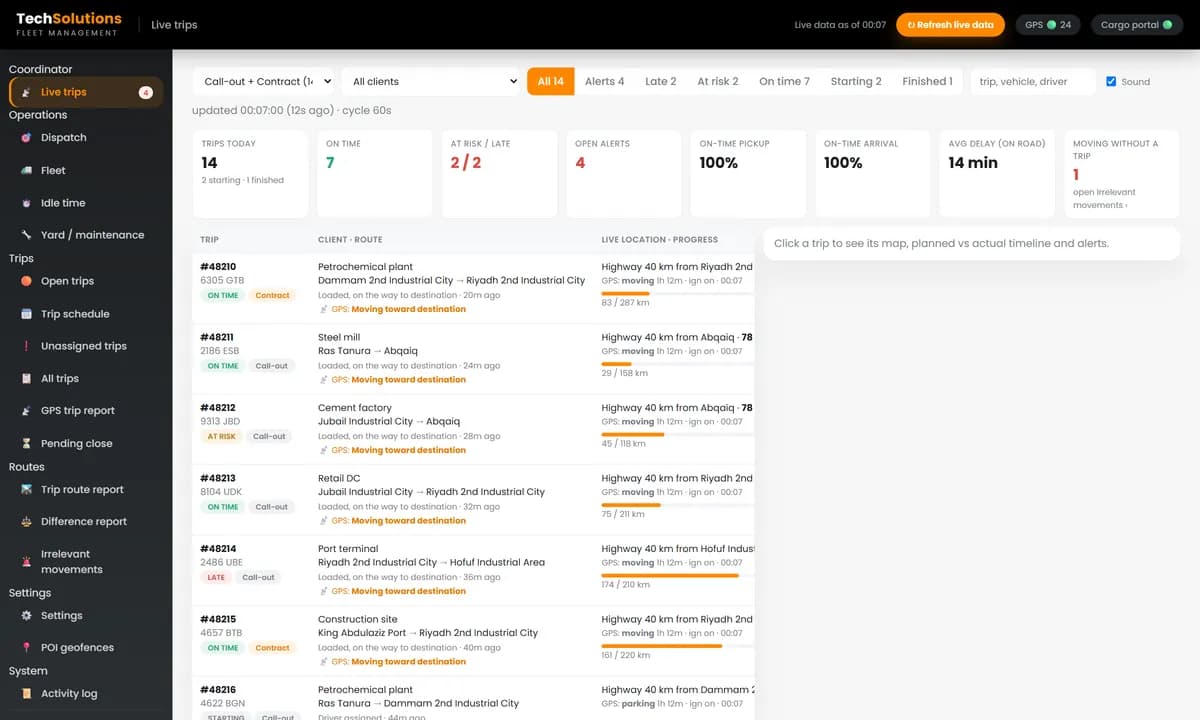
Fuel data is most useful on the same screen the dispatcher already uses. The live trips desk below shows each truck's GPS status, speed and ignition, and raises an alert when a vehicle stops outside a known place. Fuel events belong on that same board.
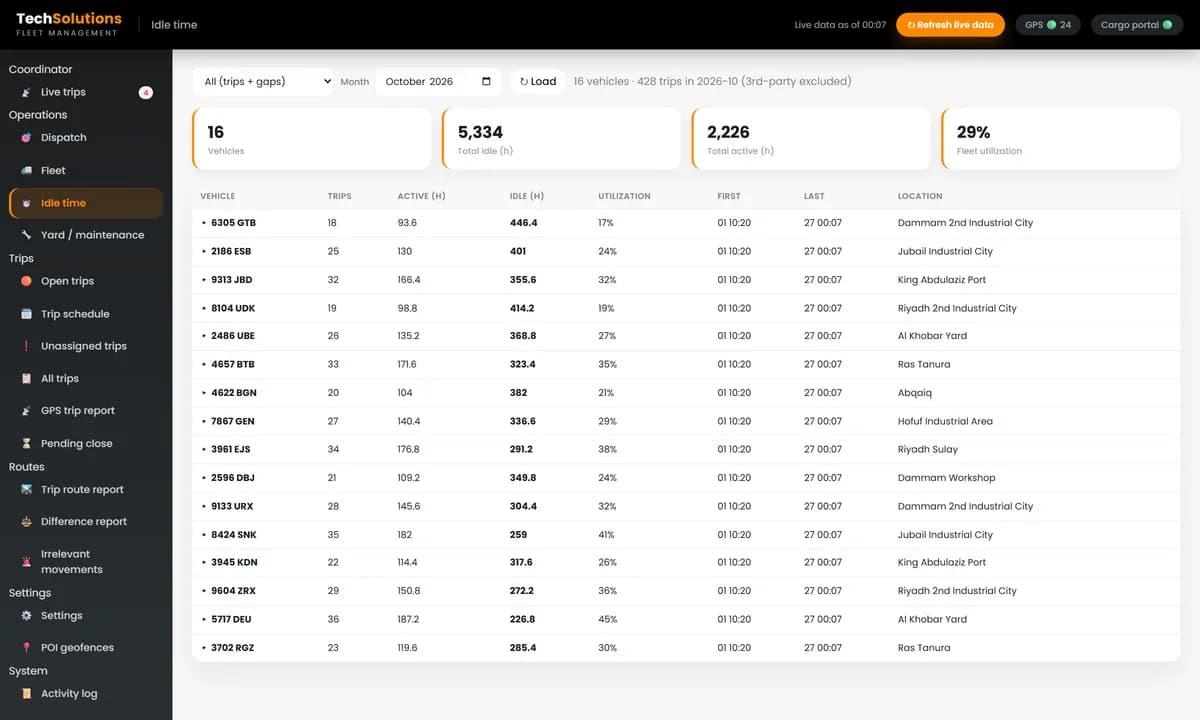
The idle-time report is the other half: engines running with the truck standing still burn fuel for nothing.
For the wider picture, read our guide to fleet management software for small business.
Questions to ask before you buy
- 1Which sensors and trackers does it support, and can it use the ones we already have?
- 2How does it detect a filling and a drain, and how does it avoid false alarms?
- 3Do alerts show the time and location?
- 4Can it match fuel-card transactions to trips and post the expense?
- 5Does it work on trucks with more than one tank?
- 6Who owns the data, and can we export it to Excel?
What we have built
We fit and configure trackers and fuel sensors, add anti-theft mesh to tanks, and build the dispatch and fuel-expense automation on top. Tell us how many trucks you run and what you use today and we will tell you what we would do.
*The live trips and idle-time screens are from our fleet systems with demonstration vehicles and trips; third-party platform names are replaced with generic labels. The tank-level graphic is an illustration, not real data.*
Frequently asked questions
It is a sensor in each fuel tank, a tracker that sends the readings and software that turns them into fuel level, consumption, fillings and drain alerts for every truck, shown with its GPS position.
It watches the tank level over time. A sudden drop while the truck is parked or away from a depot, with no trip using that fuel, raises a drain alert with the time and the location. Physical measures such as anti-theft mesh in the tank make siphoning harder.
Yes, if it is built to. Each fuel-card transaction is matched to the vehicle and trip it belongs to, so the expense carries the litres, amount and driver. Without that step, fuel bills are matched by hand at month end.
Not always. Often the fuel sensor connects to a tracker you already have, or the software reads data from your existing tracking platform. Ask any vendor which trackers and sensors they support before you commit.
Yes. We fit and configure trackers and fuel sensors and build the dispatch and fuel-expense automation on top, for fleets in Saudi Arabia, the UAE, the UK and Pakistan.
Get new articles by email
How we build automation and software, with the lessons learned. One short email when a new article goes up. No spam.
- #Fuel Monitoring
- #Fleet Management
- #GPS Tracking
- #Trucks
- #Fuel Theft